Meshtastic: Off-Grid Messaging, Hardware, and Field Guides
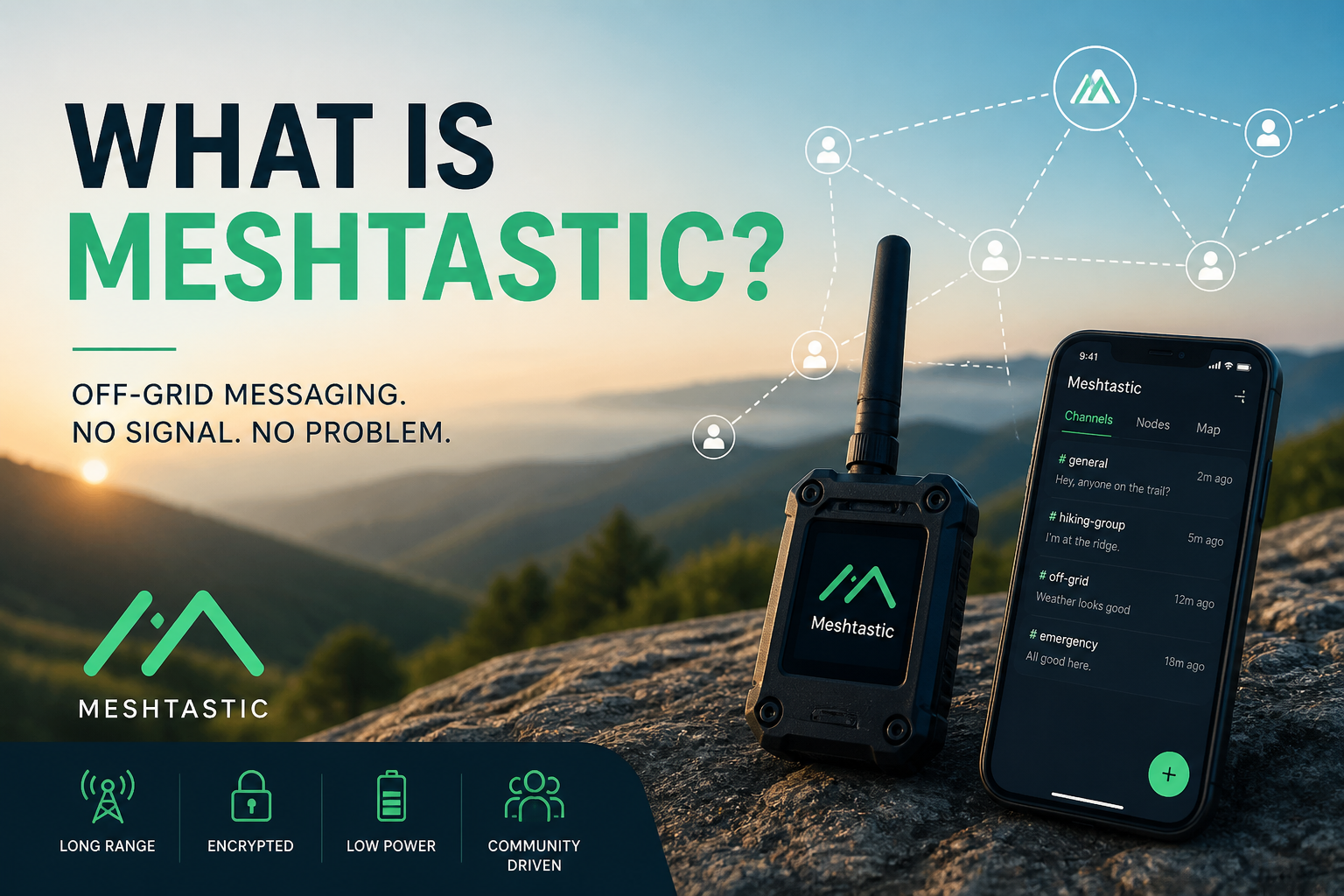
Meshtastic is an open-source LoRa mesh network that lets devices pass messages across long distances without mobile data or Wi-Fi. Instead of relying on one central connection, each node can relay traffic for nearby nodes, making the network more resilient as coverage grows.
Here you will find my Meshtastic guides and real-world notes on what works, what does not, and how to build a dependable local mesh for hiking, off-grid use, and day-to-day communication experiments.
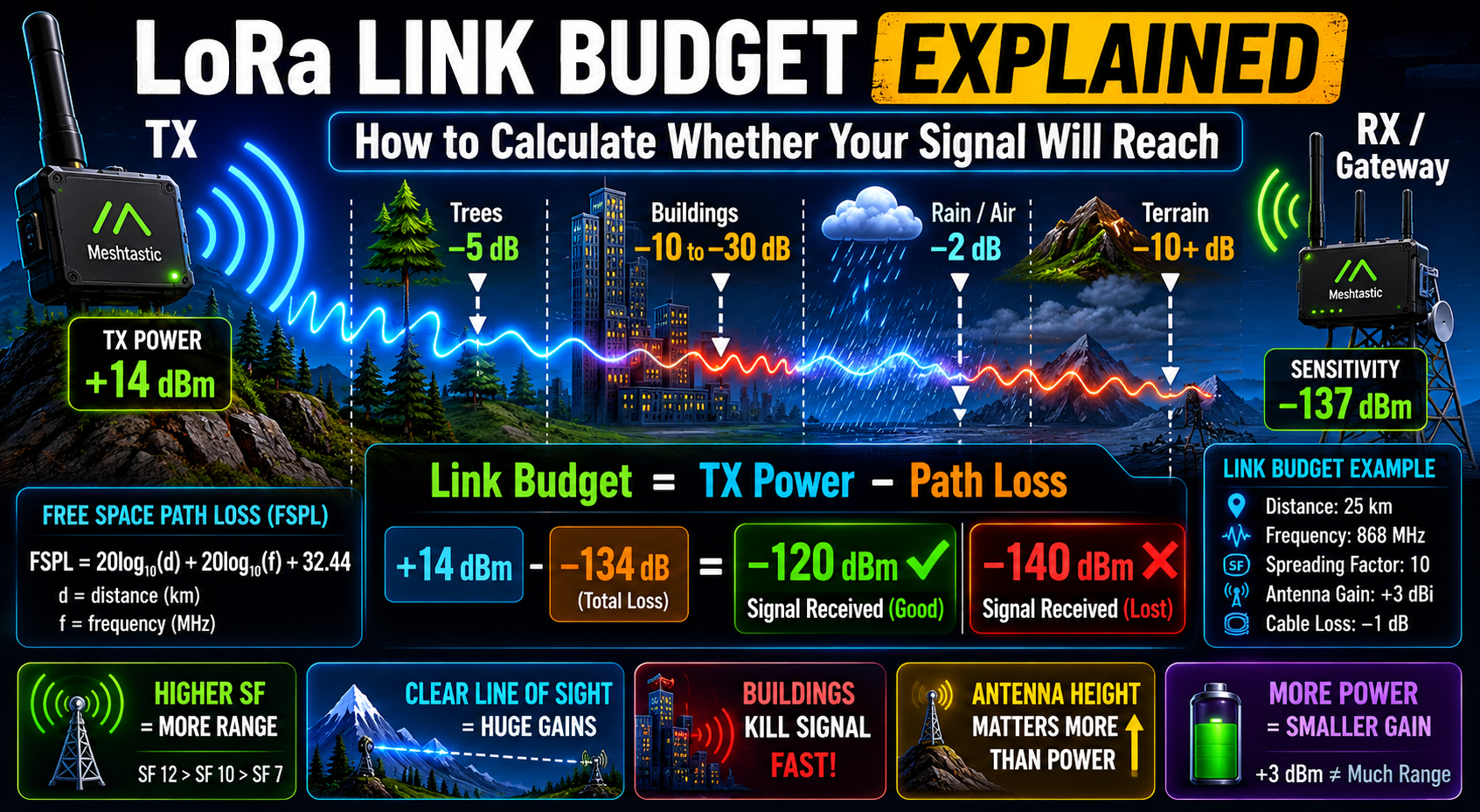
A link budget tells you whether a LoRa signal will reach its destination and by how much. Here's how to calculate one and what the numbers actually mean.
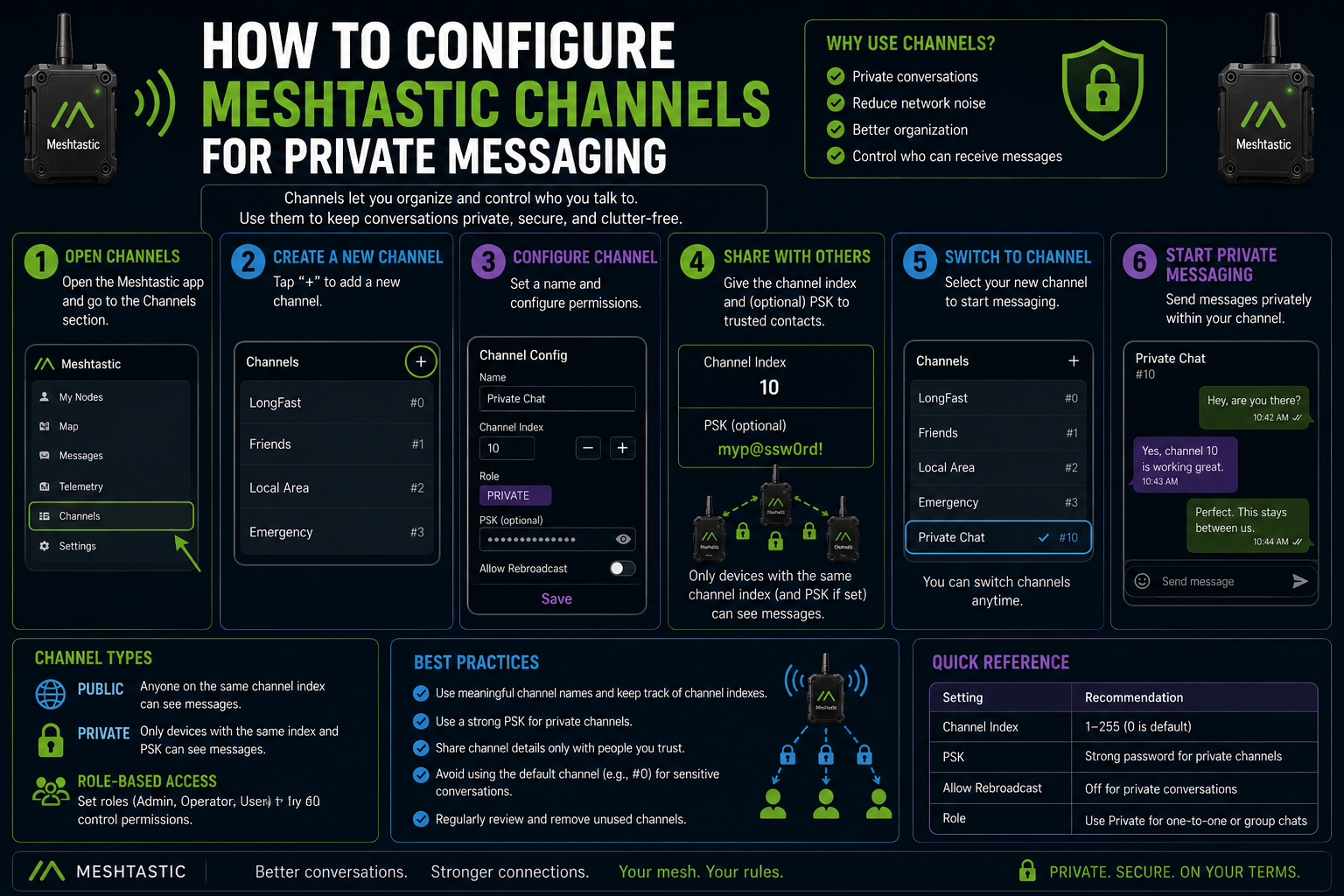
Meshtastic's default channel is open to anyone nearby. Here's how to set up a private channel with a custom encryption key so only your group can read your messages.
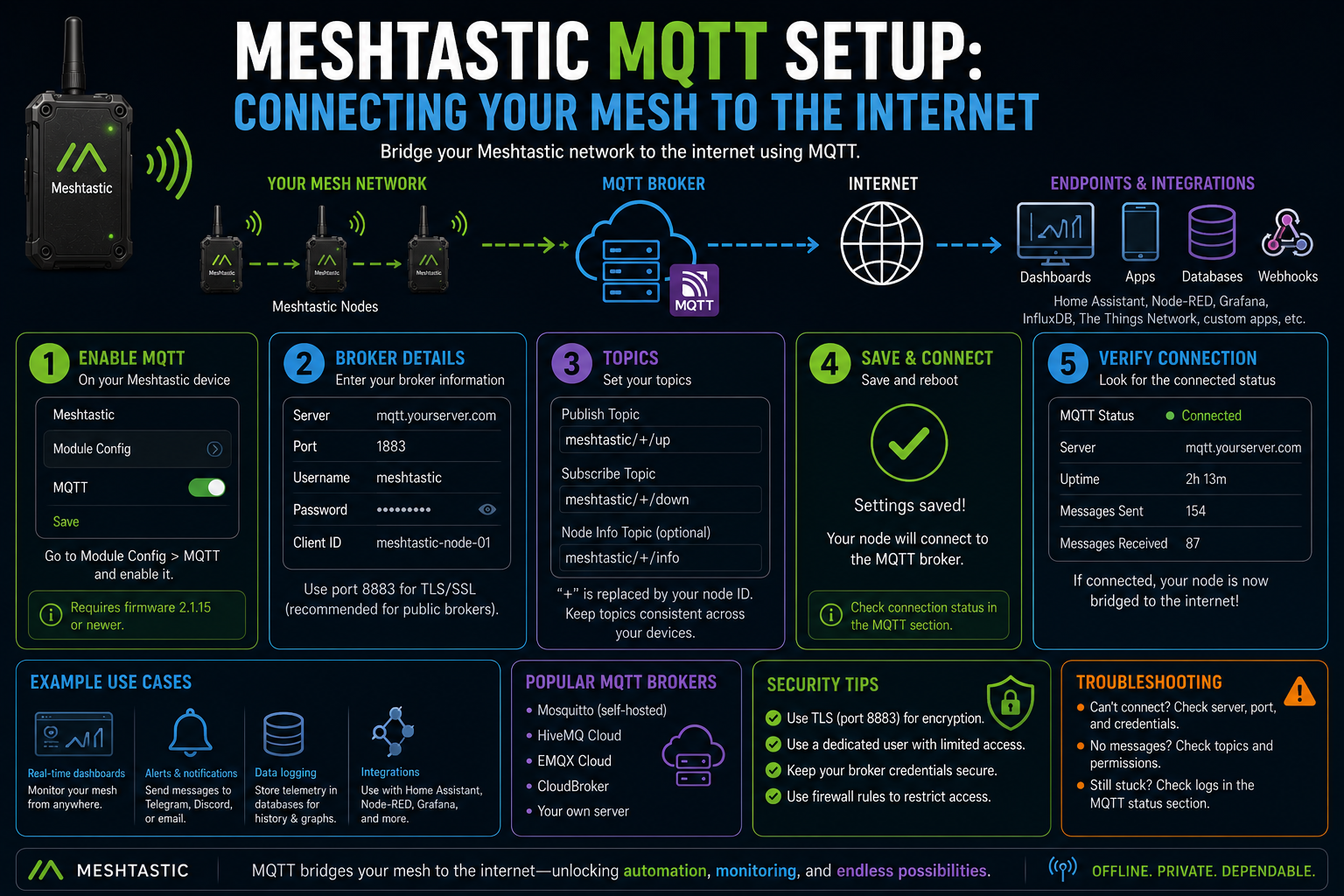
Your Meshtastic mesh can bridge messages to the internet via MQTT, connecting with nodes in other cities and feeding data into tools like Home Assistant. Here is how the setup works and what to watch out for.
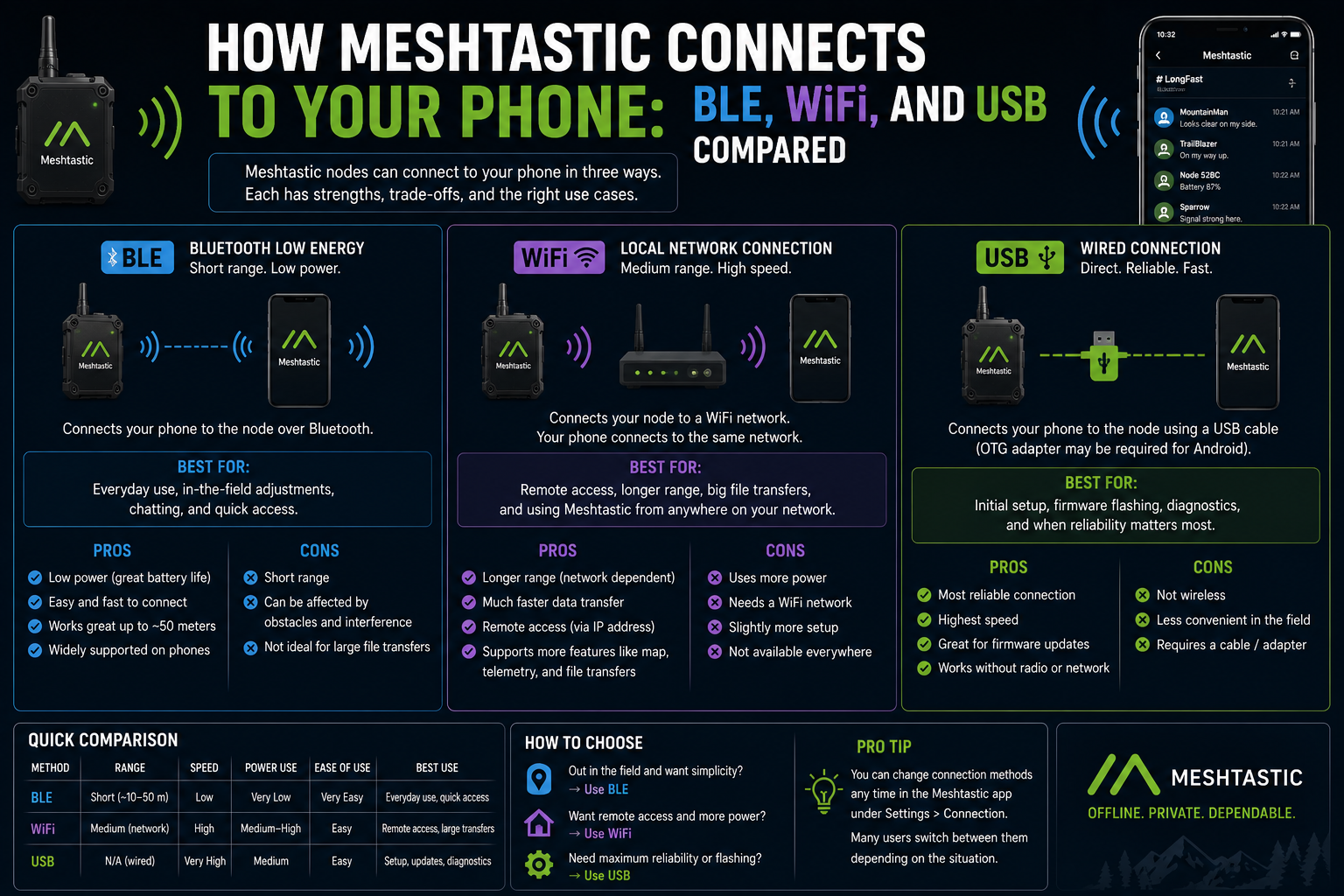
Meshtastic nodes can connect to your phone or computer three ways: Bluetooth, WiFi, and USB. Here is when each one makes sense and which to reach for first.
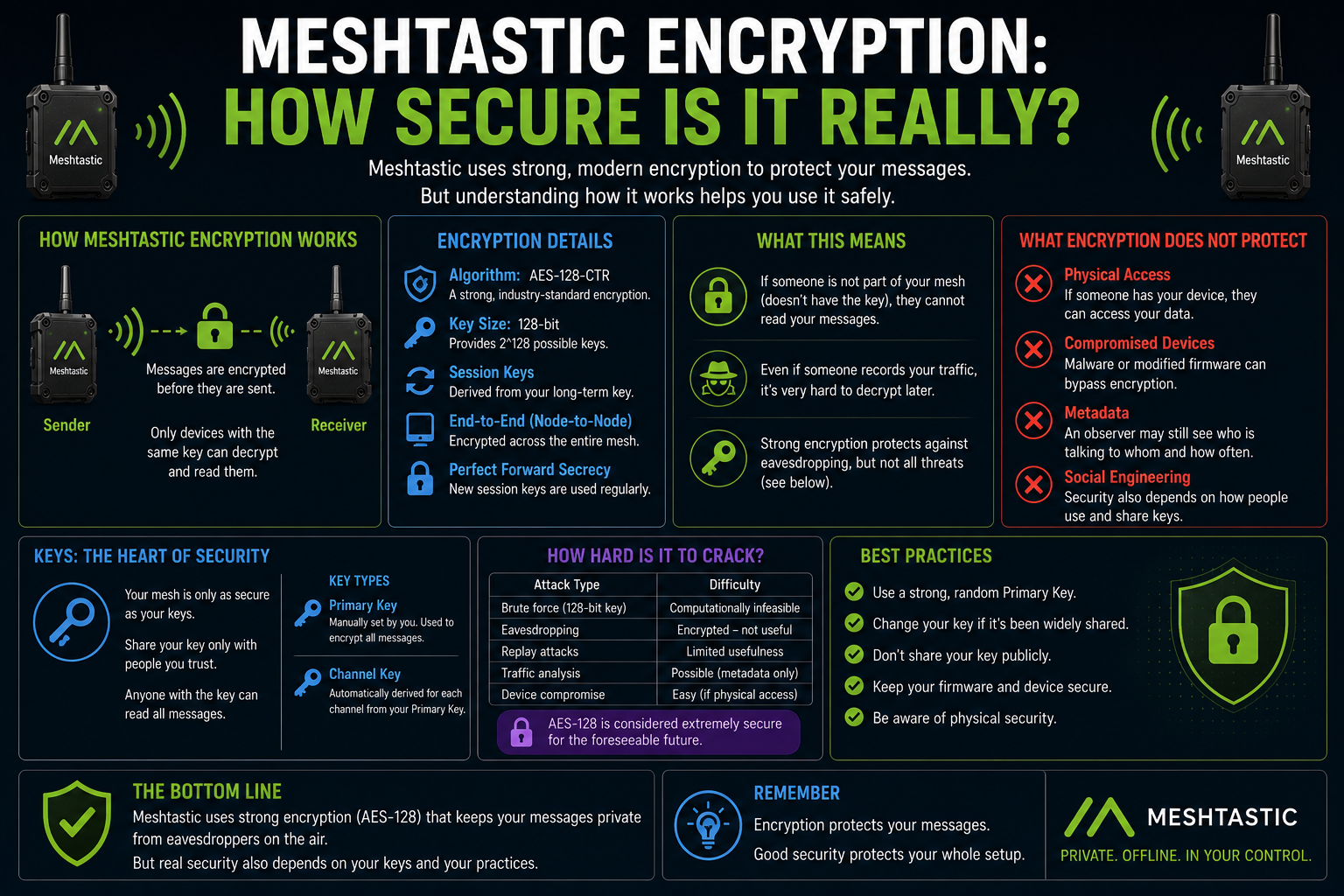
Meshtastic uses AES-256 encryption on every channel. Here is how it actually works, what the default channel does and does not protect, and where the real risks are.
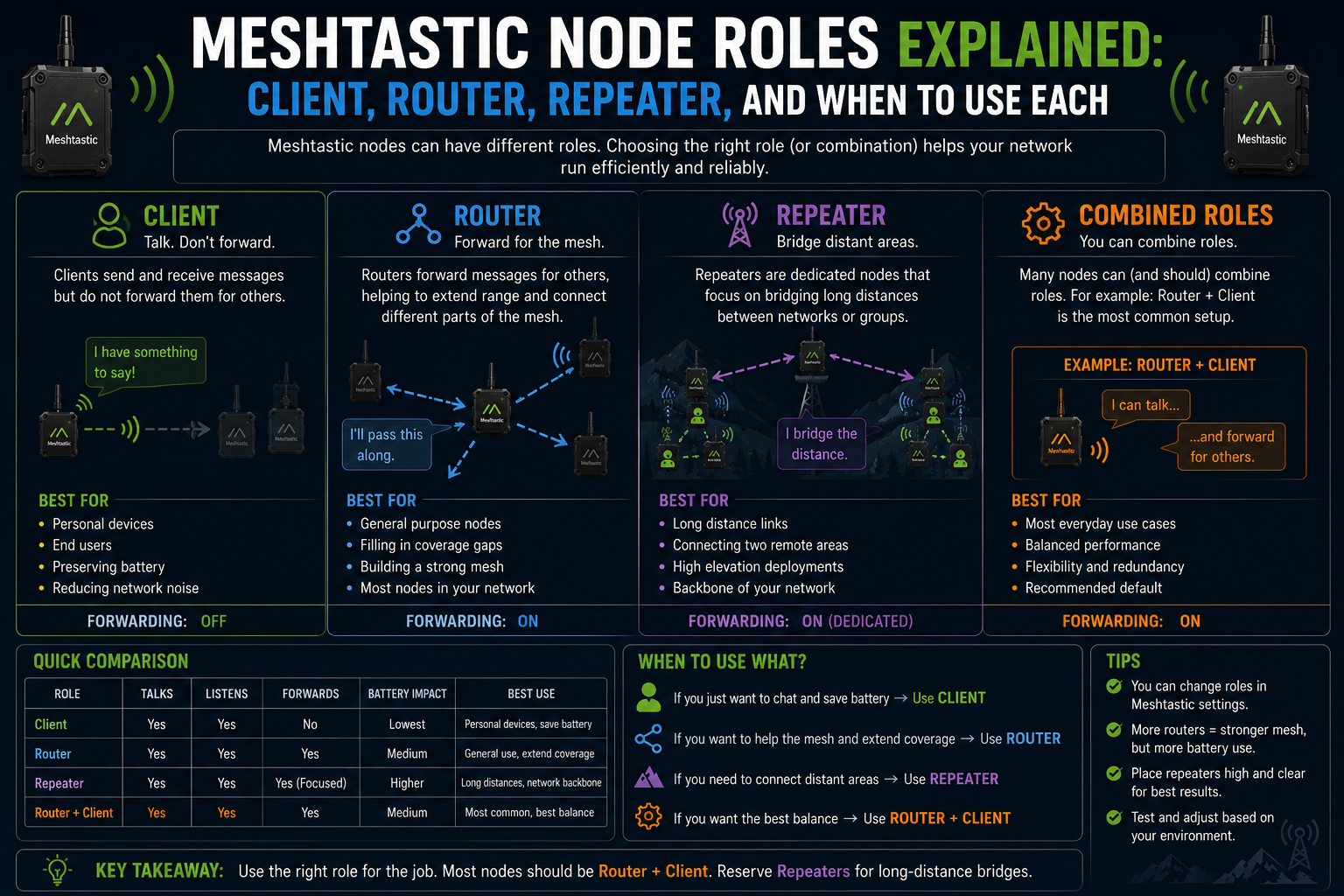
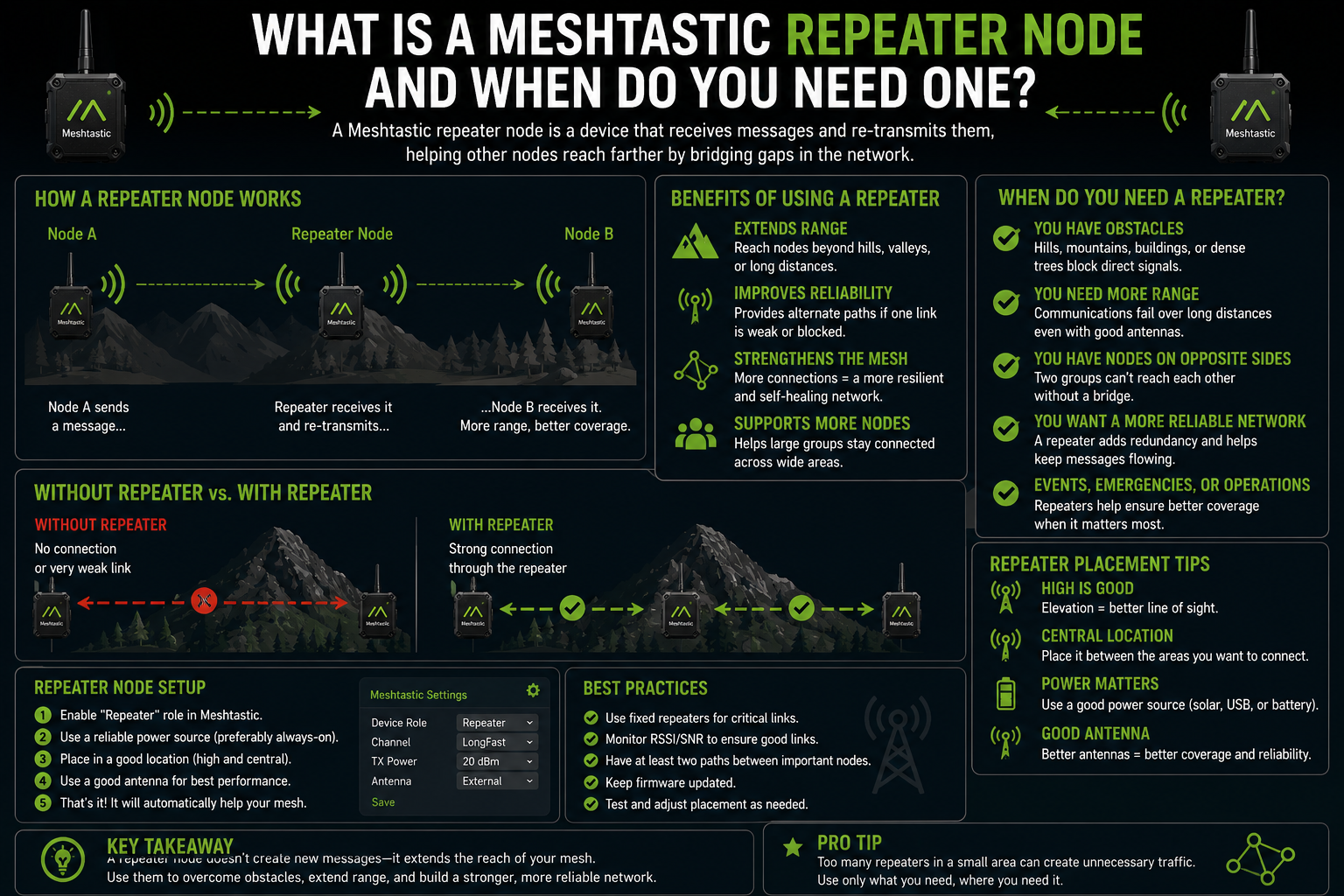
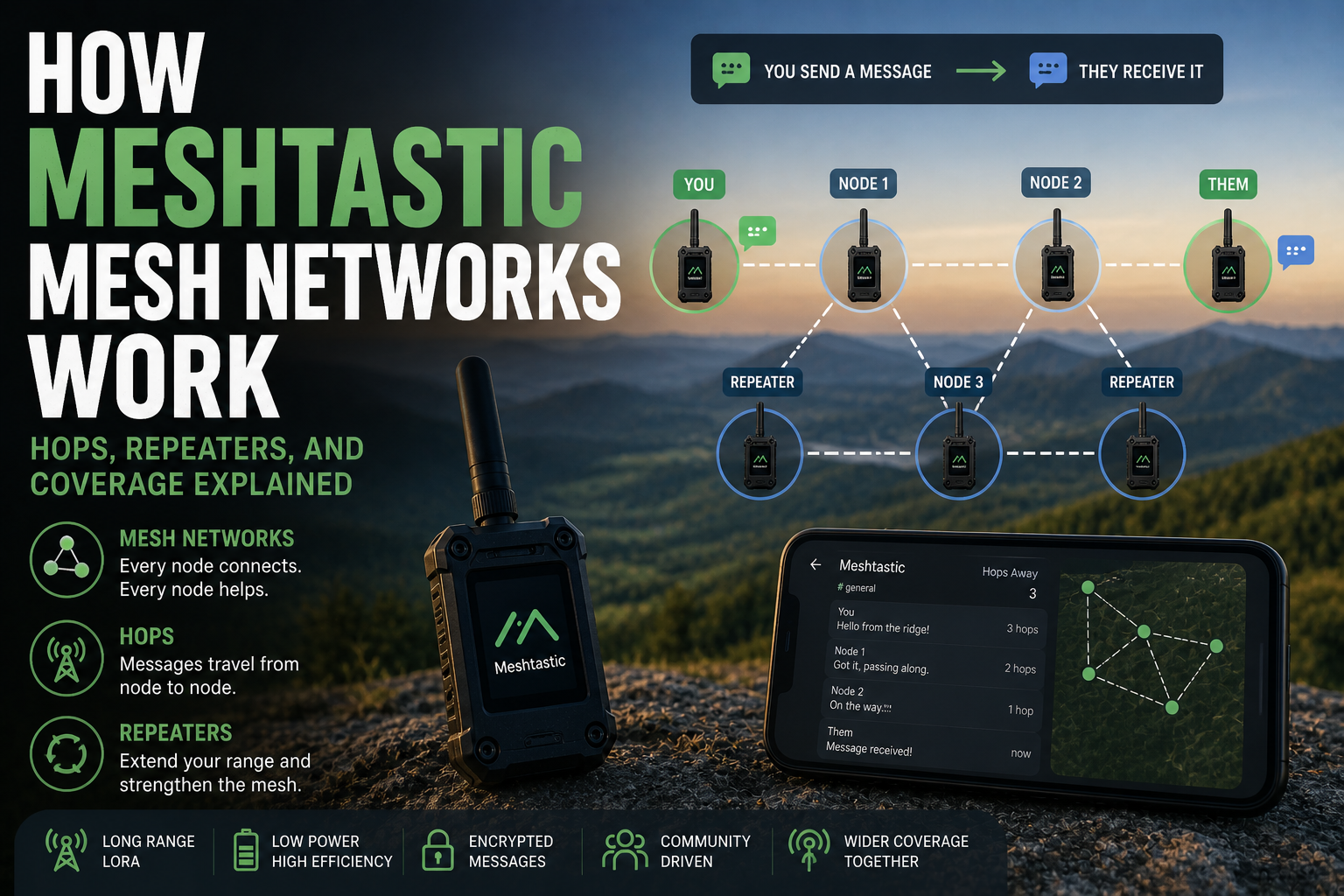
A Meshtastic repeater node bridges gaps that direct links cannot cross. Here is what one does, when you actually need one, and how to set it up properly.
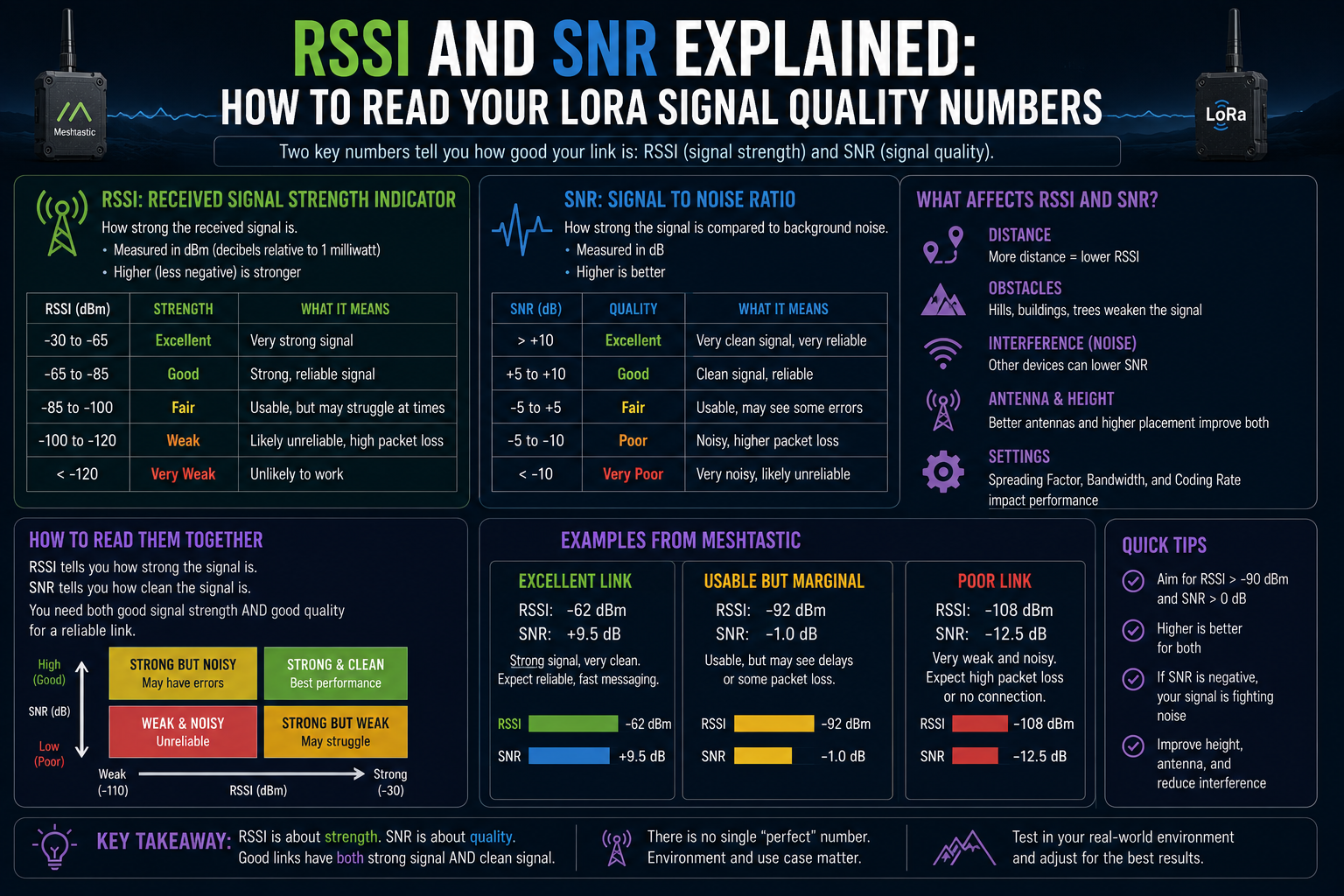
RSSI and SNR are the two signal quality numbers you will see most in Meshtastic and LoRa. Here is what they actually mean and how to use them to understand a link.
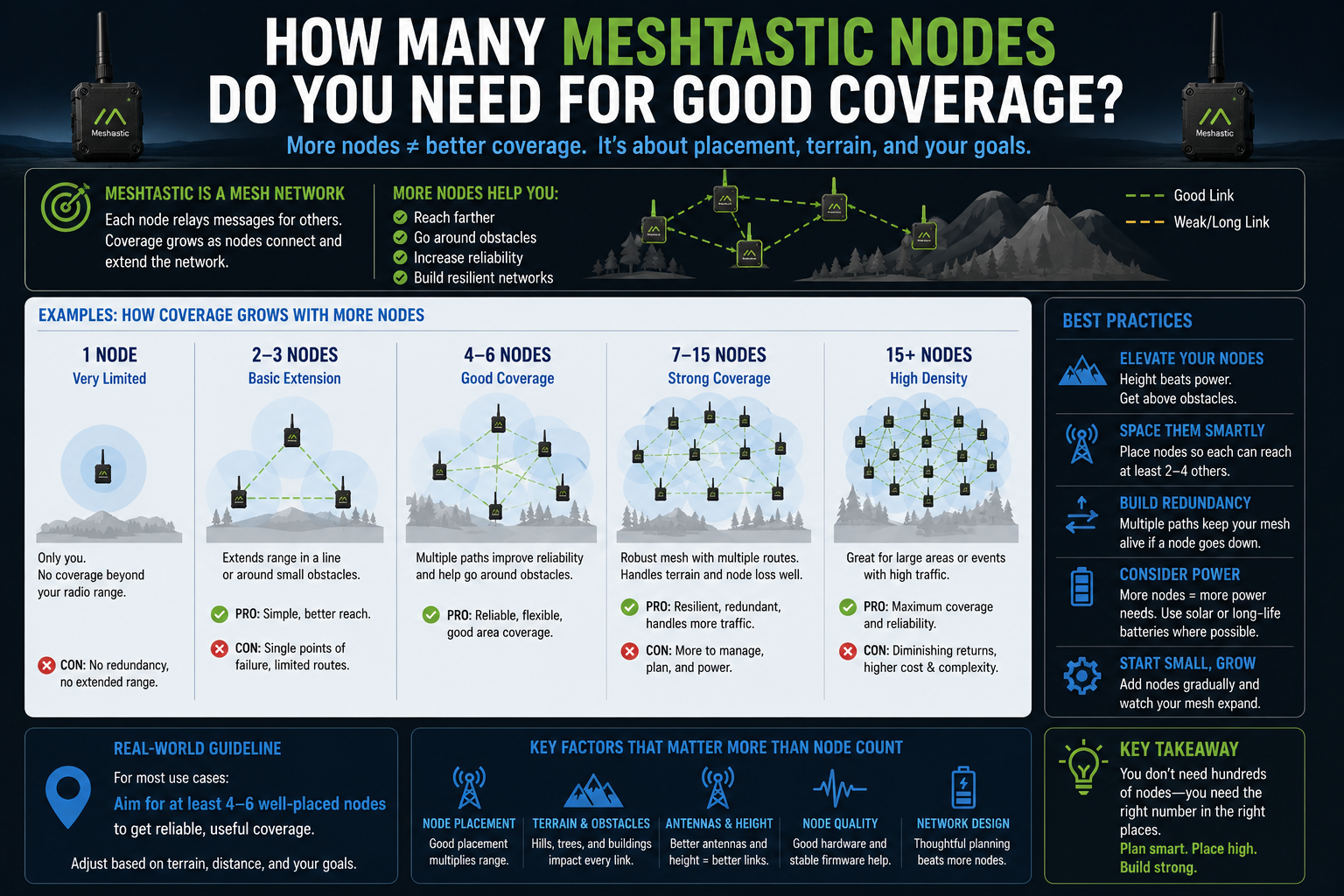
Planning a Meshtastic network? The answer to how many nodes you need isn't just about quantity. Placement and elevation matter far more than most people expect.
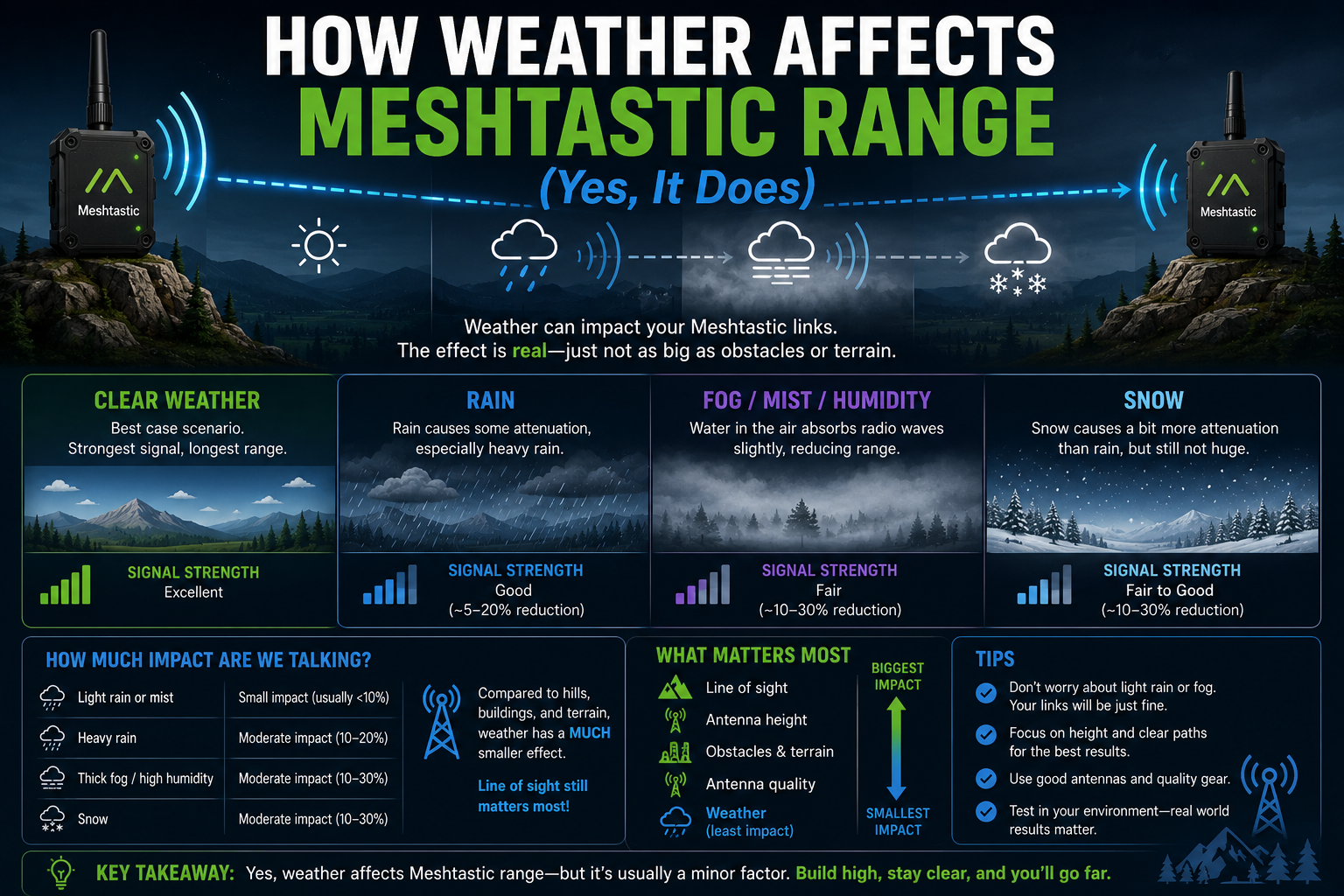
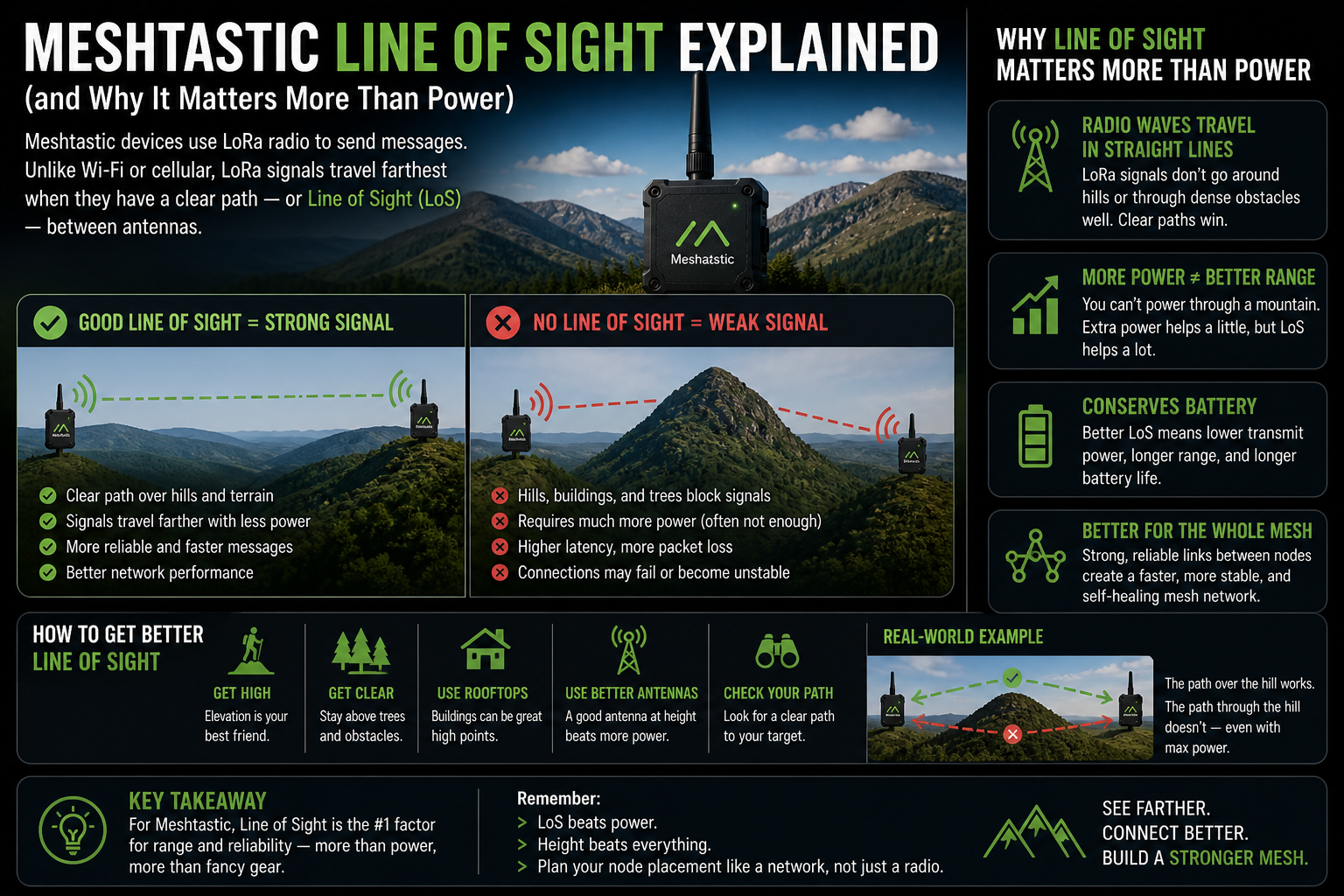
Line of sight explains more about Meshtastic range than transmit power, antenna upgrades, or spreading factor combined. Here is what it actually means in radio terms, why height clears the Fresnel zone, and how to use this to get real coverage improvements.
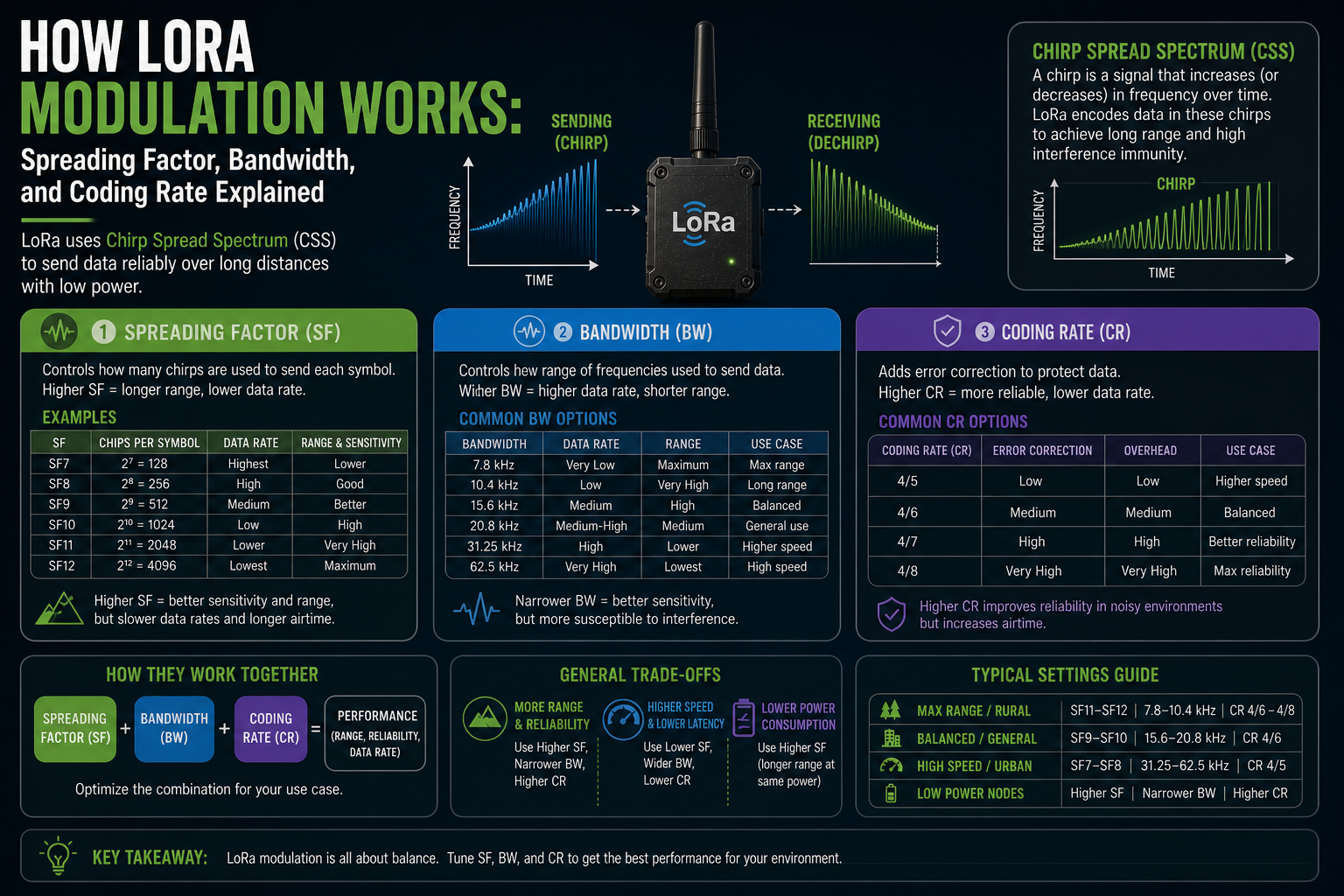
LoRa modulation is controlled by three parameters: spreading factor, bandwidth, and coding rate. Here is what each one does and how to think about the trade-offs between range, speed, and airtime.
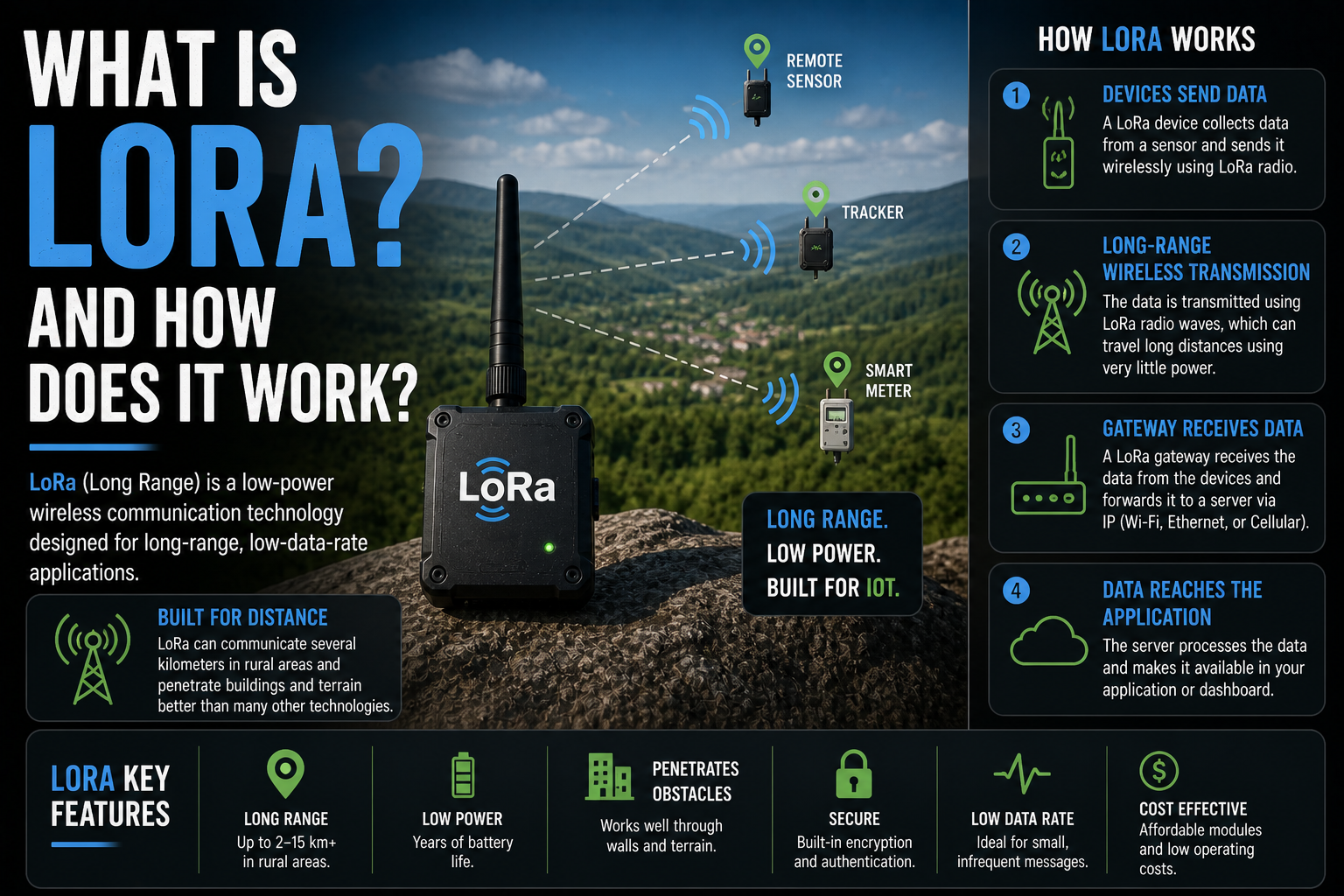
LoRa is the radio technology behind Meshtastic, LoRaWAN, and thousands of IoT projects. Here is what it actually is, how chirp spread spectrum works, and why it reaches so far on so little power.
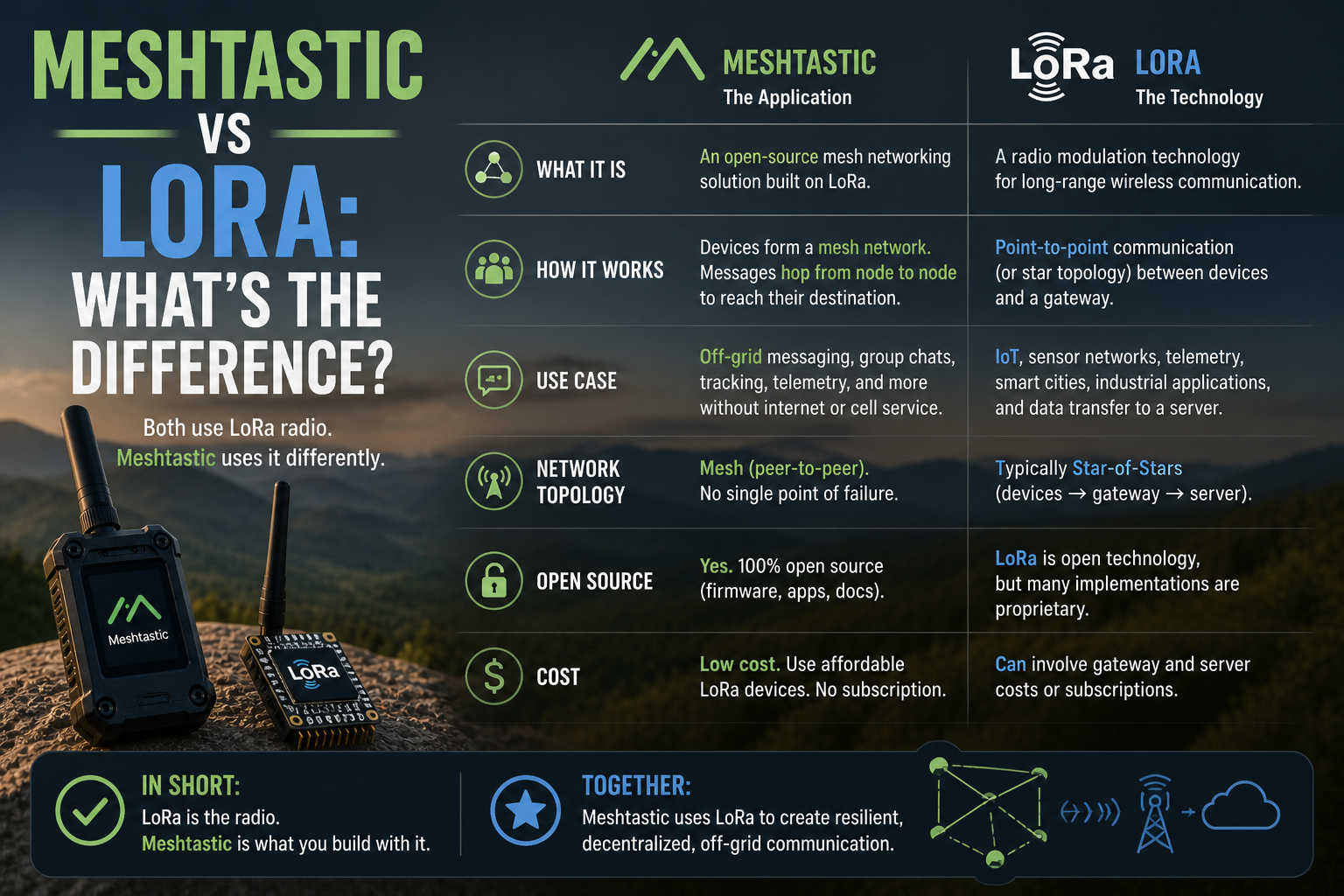
LoRa is the radio technology. Meshtastic is software that runs on top of it. They are not competing options, they are layers of the same stack, and knowing how they relate helps you understand what Meshtastic actually is.
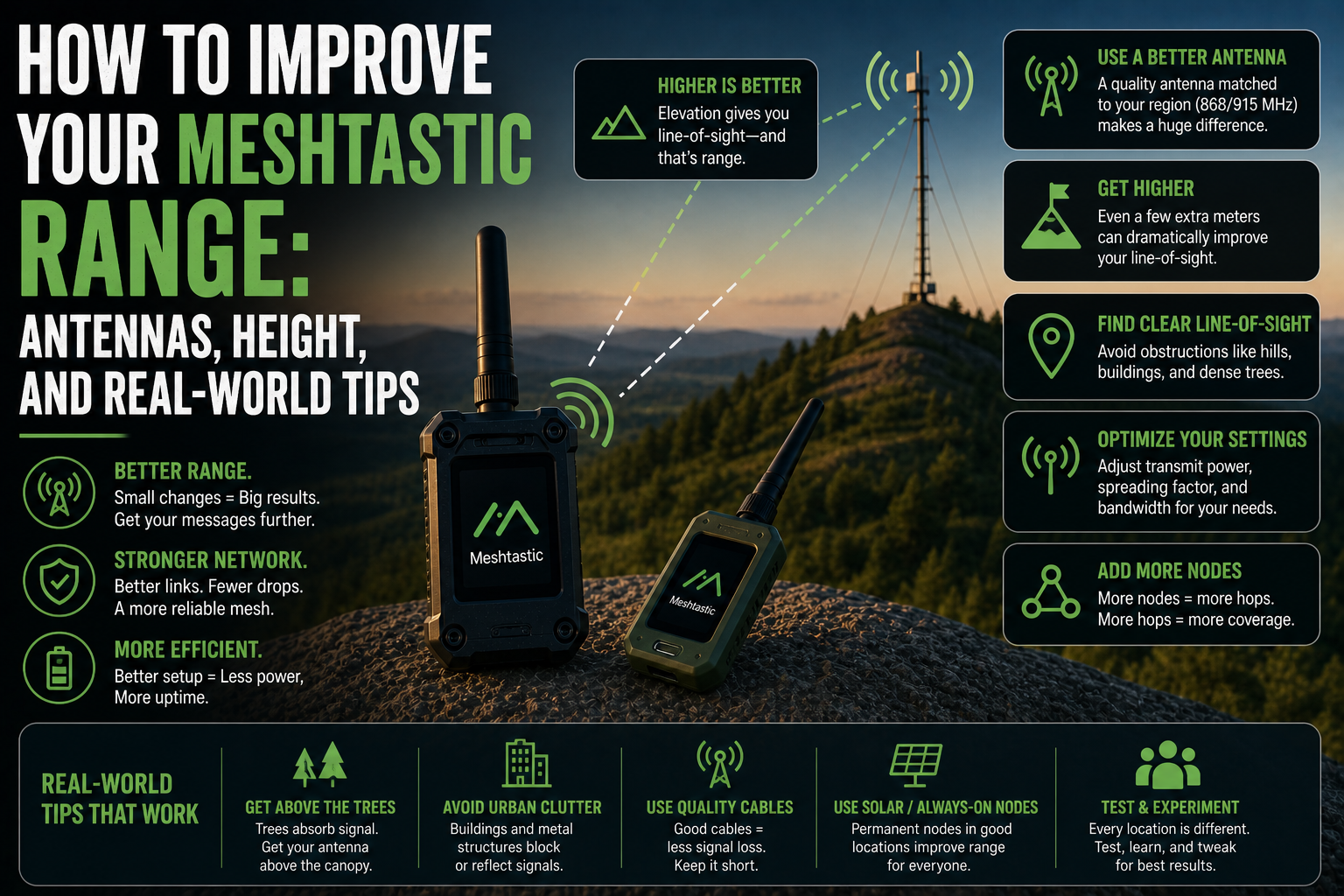
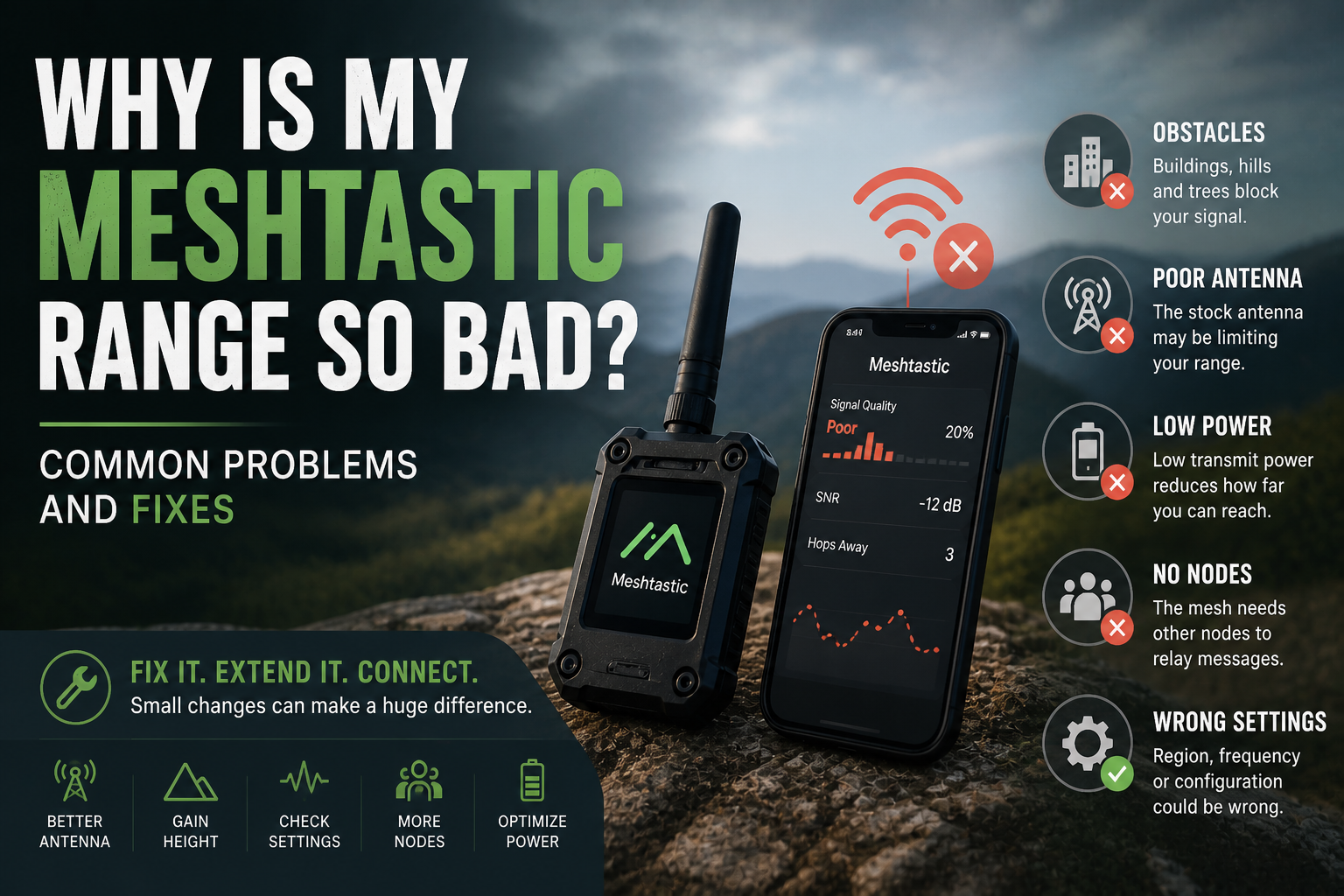
Getting more range from your Meshtastic node comes down to three things: a better antenna, more height, and understanding what the radio signal actually has to deal with.
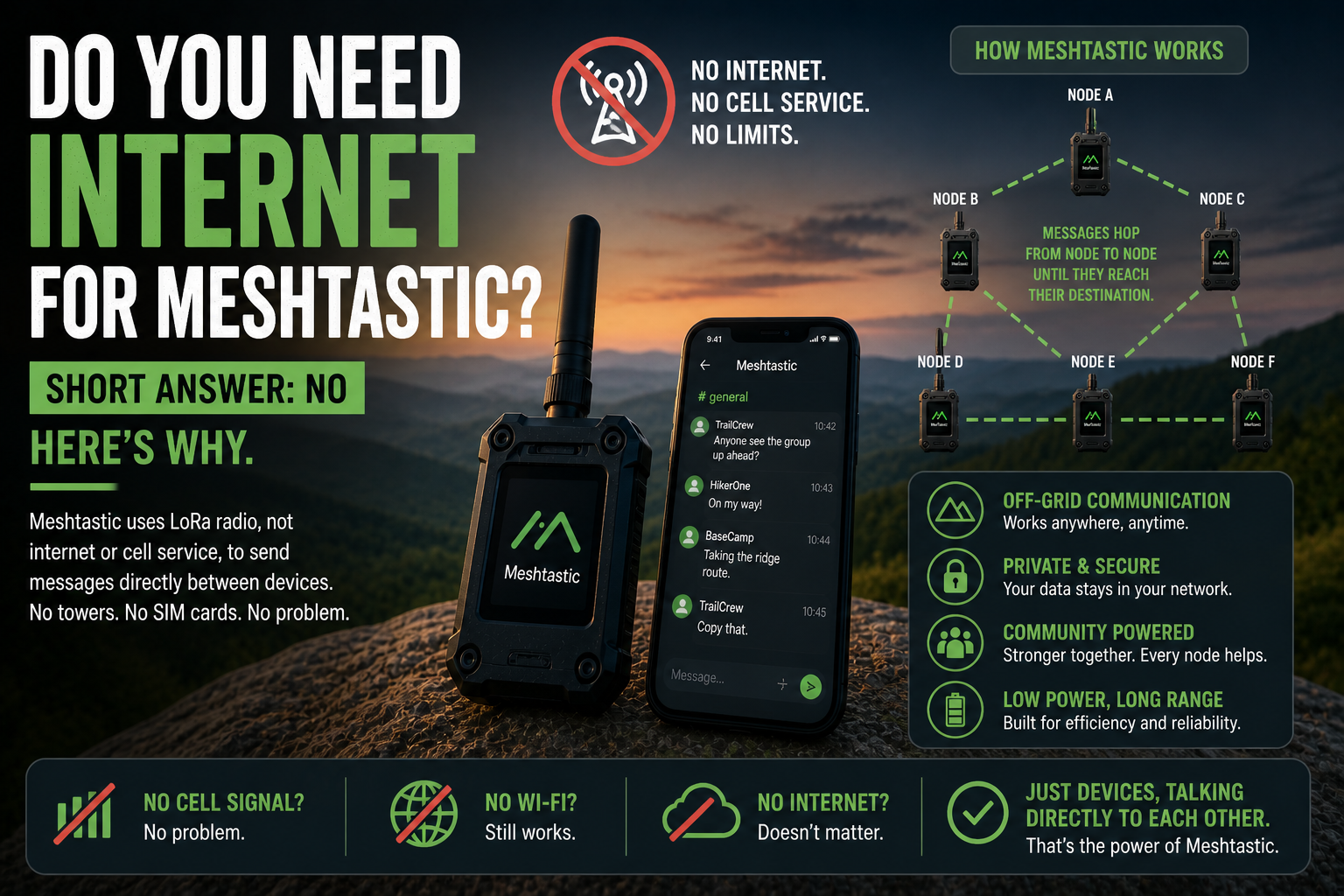
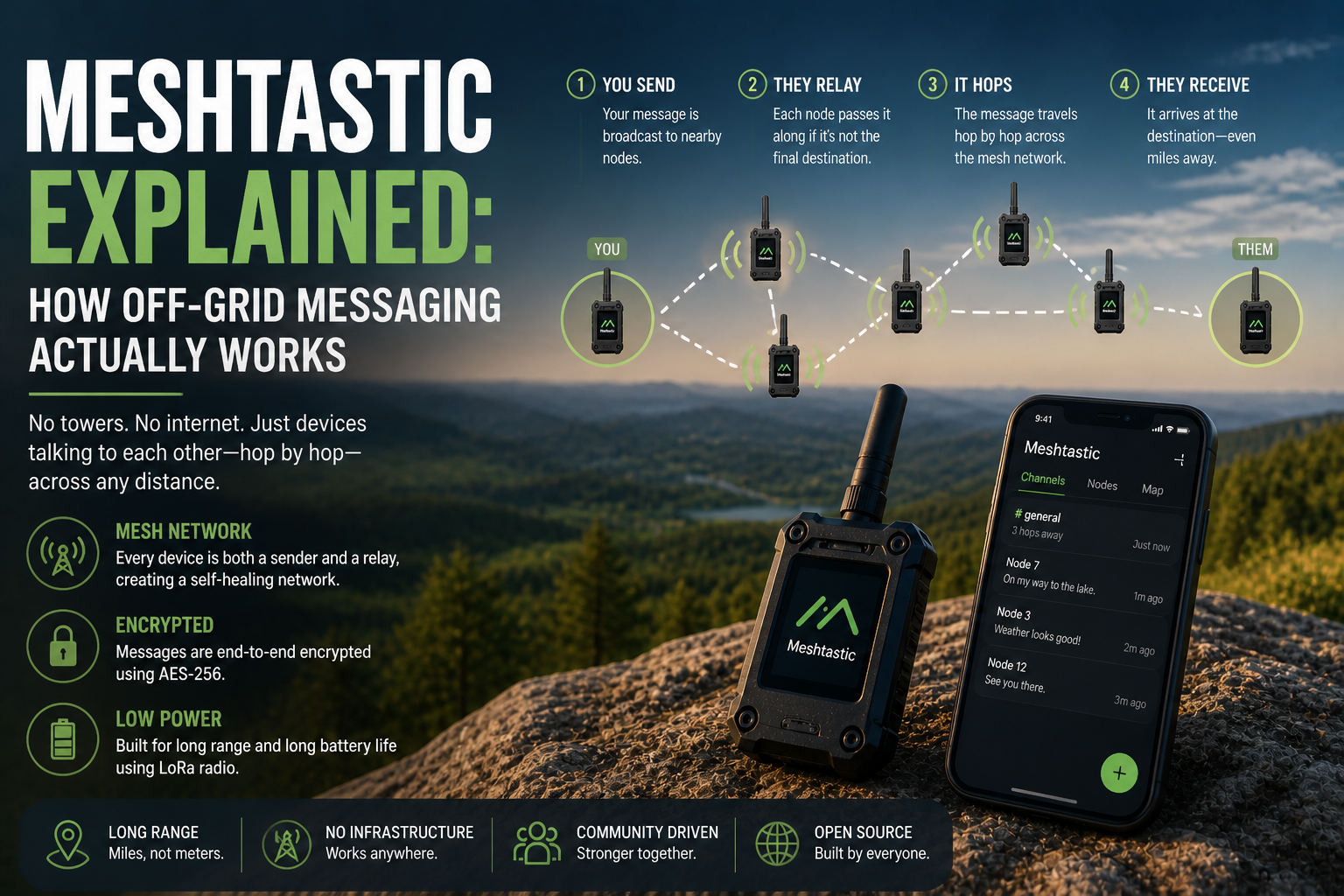
Meshtastic works without the internet, without a mobile network, and without any central infrastructure at all. Here is how that is possible and what it means for how you use it.
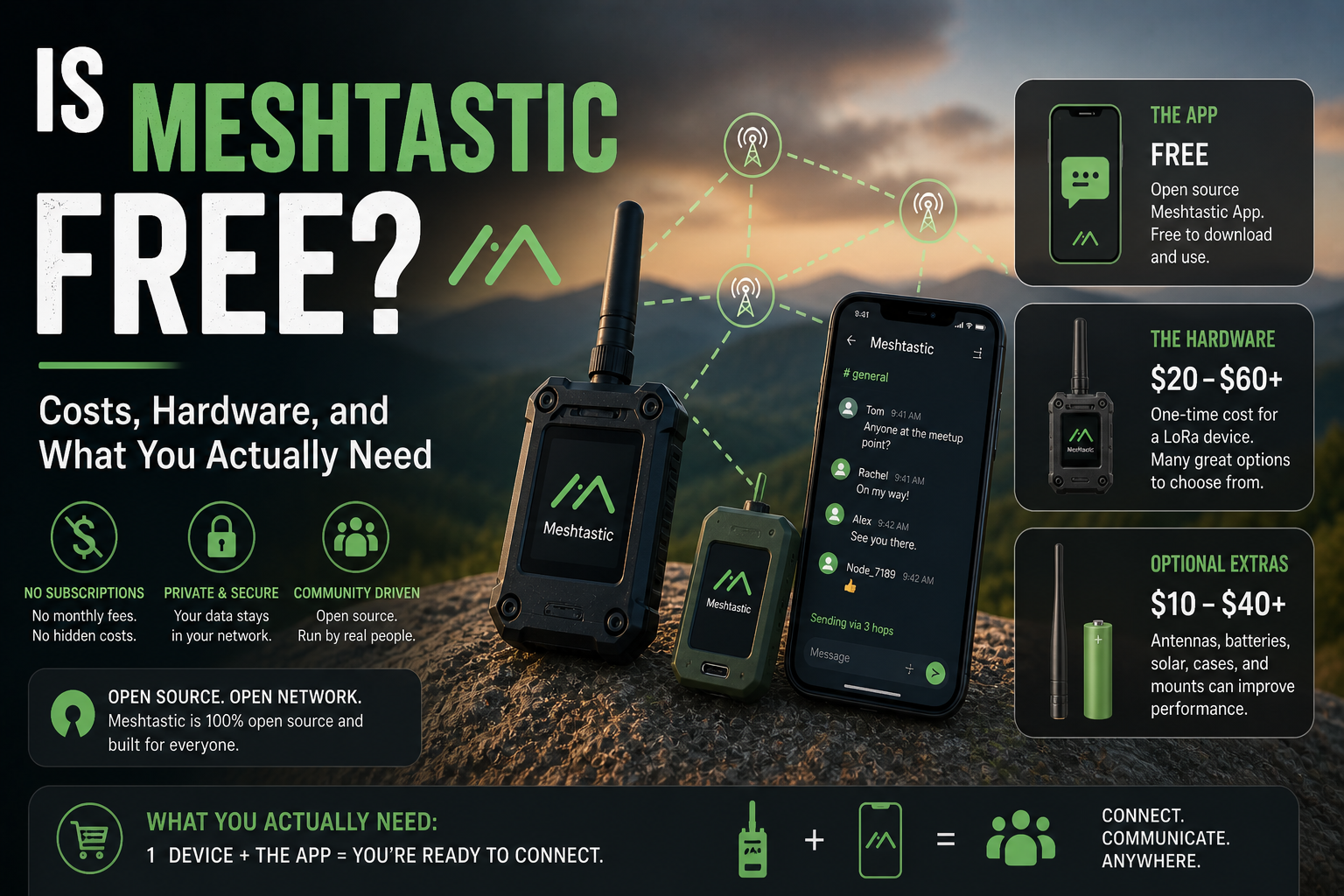
Meshtastic itself is free, open-source software. But you do need hardware to run it, and that costs money. Here is exactly what you need to get started and what it will set you back.
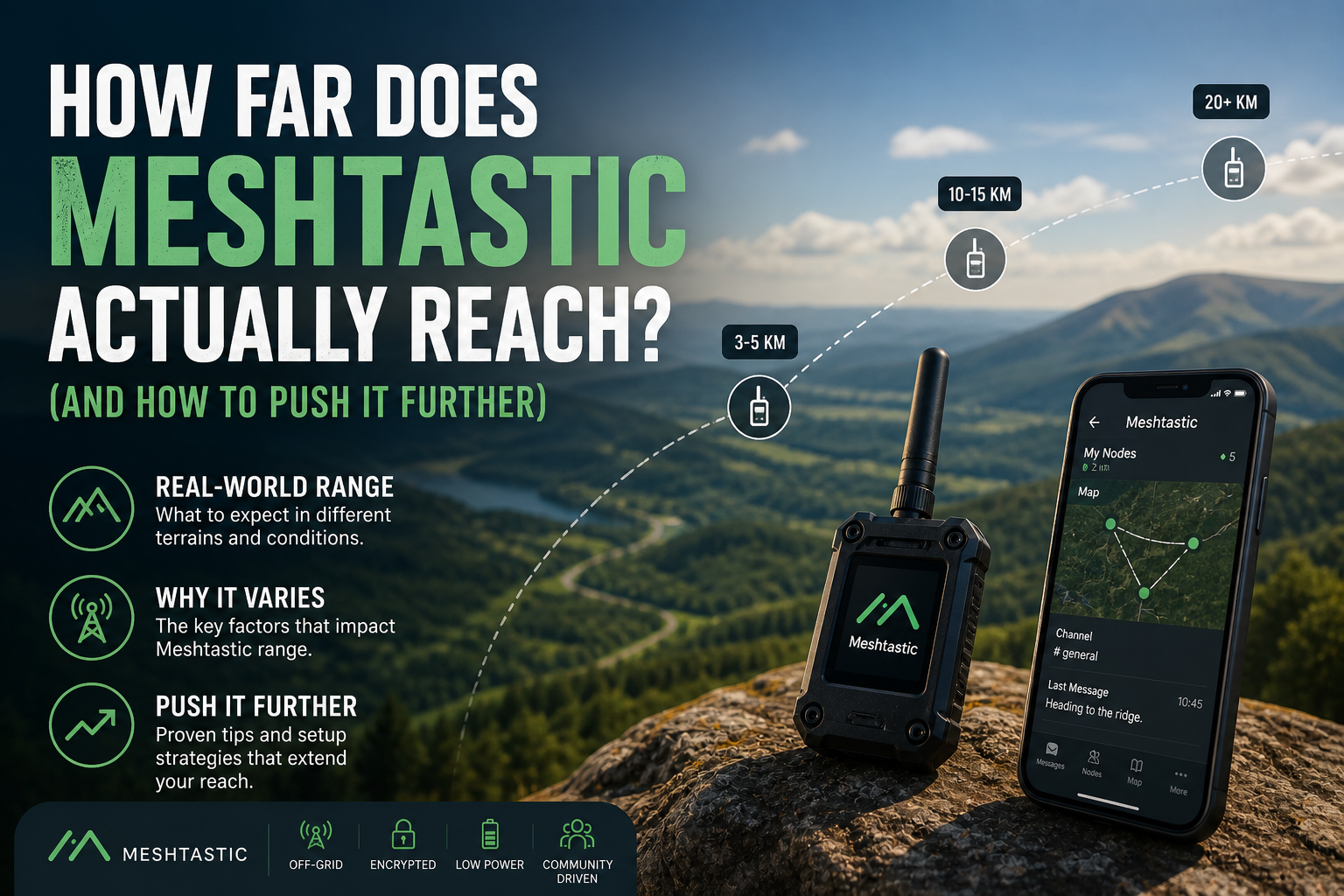
This is the first question everyone asks when talking about meshtastic.Not "what hardware do I need" or "how do I set it up." Just — how far does this thing actually go?
Meshtastic lets you send messages without a phone signal, Wi-Fi, or any central infrastructure. Here is how off-grid messaging actually works, from the hardware in your hand to the network it creates.
Meshtastic messages do not just travel in a straight line from one device to another. They hop through a network of nodes, and understanding how that works explains both what Meshtastic can do and where its limits are.
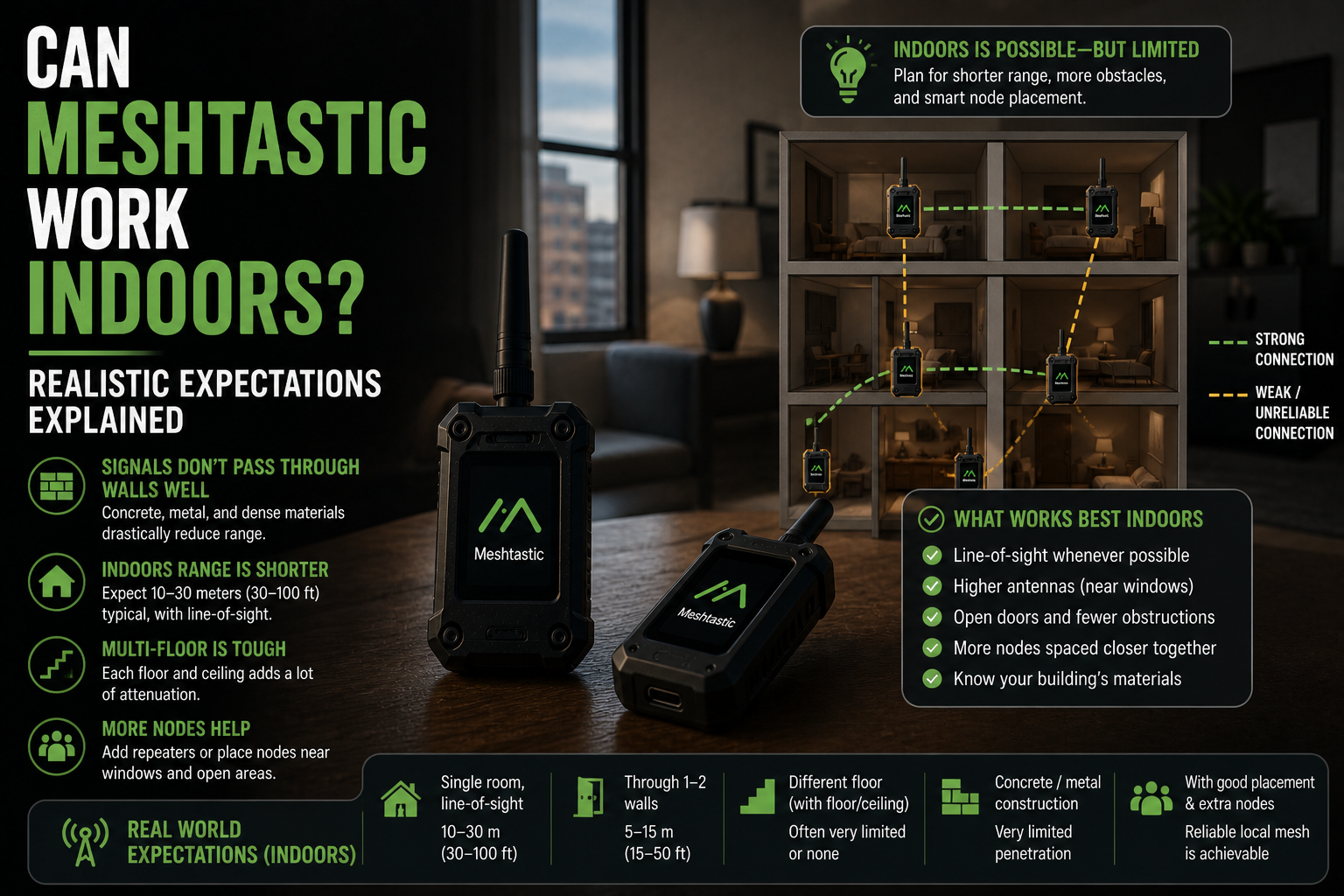
Poor Meshtastic range is one of the most common complaints from new users, and it is almost always fixable. Here are the real reasons your signal is falling short and what to do about them.